
Stats & Training
Attack and Defense carry most of Paras's stat budget. Speed's the obvious dump stat. Common in the wild and yields 1 Attack EV. Follows a medium-fast 1M XP curve.
Sometimes seen at the foot of trees in humid forests. The mushrooms on its back—called tochukaso—are not present on infant specimens and instead emerge as Paras matures.
Paras Weakness
Type-wise, Paras takes extra damage from Fire, Flying, Ice, Poison, Bug, and Rock. Watch out for Fire and Flying attacks, those deal 4x damage. 5 resistances help offset the weaknesses. Dry Skin grants an additional Water immunity, reshaping the matchup chart.
| Damage | Types |
|---|---|
| 4x (Critical) | Fire, Flying |
| 2x (Weak) | Ice, Poison, Bug, Rock |
| 0.5x (Resist) | Water, Electric, Fighting |
| 0.25x (Resist) | Grass, Ground |
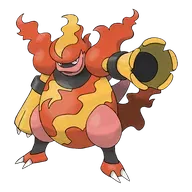
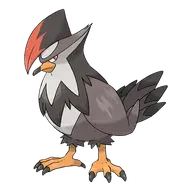
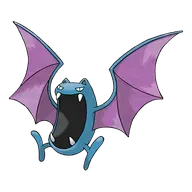
In Legends: Arceus, Volcarona can KO Paras with Psychic (85-100%). Tyranitar threatens a KO with Stone Edge (421-496%). Torkoal's Eruption also KOs at 618-728%.
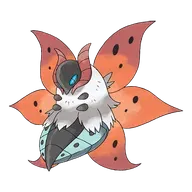 Volcarona BugFire | A | |
Recommended Build AbilityFlame Body ItemHeavy-Duty Boots NatureModest Moves
Damage vs Paras View Volcarona builds →Psychic85-100%KO | ||
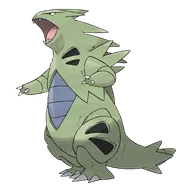 Tyranitar RockDark | A | |
Recommended Build AbilitySand Stream ItemChoice Band NatureAdamant Moves
Damage vs Paras View Tyranitar builds →Crunch169-199%KO Stone Edge 2x421-496%KO Earthquake35-41% | ||
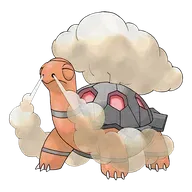 Torkoal Fire | B | |
Recommended Build AbilityDrought ItemHeatrock NatureModest Moves
Damage vs Paras View Torkoal builds →Eruption 4x618-728%KO Flamethrower 4x372-438%KO | ||
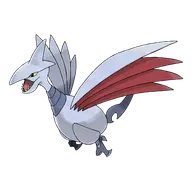 Skarmory Steel | B | |
Recommended Build AbilitySturdy ItemRocky Helmet NatureImpish Moves View Skarmory builds →
| ||
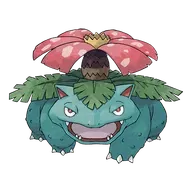 Venusaur GrassPoison | B | |
Recommended Build AbilityChlorophyll ItemLife Orb NatureModest Moves
Damage vs Paras View Venusaur builds →Sludge Bomb 2x268-316%KO Giga Drain28-33% | ||
Legends: Arceus Evolution
One evolution ahead. Paras grows into Parasect through a straightforward two-stage chain. A decent partner pool for breeding via two egg groups. Eggs are average hatch time. Evolving adds up to 120 stat points total. View every chain in the Evolution Chart.
How to Evolve


Legends: Arceus Paras Best Moveset
Best Build
Legends: Arceus uses different battle mechanics.
Competitive build content is not applicable for this game. Select a main series game for builds.
Moves
Not a lot to pick from. Paras gets Energy Ball and X-Scissor for same-type damage, and Poison and Normal coverage and more rounds things out. You're building around what's available rather than choosing from a deep bench.
Level-Up Moves
TM Moves
Egg Moves
Tutor Moves
Legends: Arceus Paras Locations
Paras starts showing up in mid-game routes at decent spawn rates across 8 encounter spots. The list below is sorted so you can pick what fits your current progress without scrolling through everything.
Best Locations to Catch Paras in Legends: Arceus
Walking encounters at walking across 8 spots for Paras. Sorted by progression so you can see what's reachable at your current point in the game.
Paras Guide
Paras evolves into Parasect at level 24. One evolution, no branching. Solid jump from 285 BST.
Paras evolves into Parasect at level 24. Takes some grinding. Plan your team around the mid-game wait.
For Legends: Arceus, you can run Paras through the first few routes without issues. 285 BST won't carry you far though. Get it to Parasect as fast as you can.
Paras is catchable in Legends: Arceus. Check the Locations section above for specific routes, encounter rates, and methods. It also appears in 18 other games across the series.
Game Availability
One of the original 151, Paras has appeared in 19 games — most mainline games. From Red & Blue through the latest titles, it's rarely been left out of a regional Pokedex.
Click a game to view version-specific details
- Gen 1Y
 Yellow
 - Gen 1RBDebut
 Red & Blue
 - Gen 2GS
 Gold & Silver
 - Gen 2C
 Crystal
 - Gen 3RS
 Ruby & Sapphire
 - Gen 3FRLG
 FireRed & LeafGreen
 - Gen 3E
 Emerald
 - Gen 4Pt
 Platinum
 - Gen 4HGSS
 HeartGold & SoulSilver
 - Gen 4DP
 Diamond & Pearl
 - Gen 5BW
 Black & White
 - Gen 5B2W2
 Black 2 & White 2
 - Gen 6XY
 X & Y
X & Y - Gen 6ORAS

 Omega Ruby & Alpha Sapphire
 - Gen 7USUM
 Ultra Sun & Ultra Moon
 - Gen 7SM

 Sun & Moon
 - Gen 7LGPE

 Let's Go Pikachu & Eevee
 - Gen 8SwSh

 Sword & Shield
 - Gen 8PLA
 Legends: Arceus
 - Gen 8BDSP
 Brilliant Diamond & Shining Pearl
 - Gen 9SV
 Scarlet & Violet
 - Gen 9LZA
 Legends: Z-A
 - Gen 10WW
 Winds & Waves