
Stats & Training
Larvitar's stats barely vary. None sit in respectable range with no real gaps. It's a blank slate for EV investment. Worth 1 Attack EV, slow 1.25M XP grind to max.
Born underground, it eats its way through dirt to the surface, where its parents are. It doesn’t deal well with the bright light it finds there.
Raised on nutrients it finds in the dirt, it eats roughly a mountain’s worth of dirt before it becomes a pupa.
Larvitar Weakness
Type-wise, Larvitar takes extra damage from Water, Grass, Ice, Fighting, Ground, and Steel. Watch out for Water and Grass attacks, those deal 4x damage. Electric moves do nothing thanks to a full immunity. It resists 5 types, giving it decent defensive coverage.
| Damage | Types |
|---|---|
| 4x (Critical) | Water, Grass |
| 2x (Weak) | Ice, Fighting, Ground, Steel |
| 0.5x (Resist) | Normal, Fire, Flying, Rock |
| 0.25x (Resist) | Poison |
| 0x (Immune) | Electric |
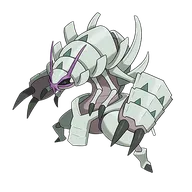 Golisopod BugWater | B | |
Obtain MethodEvolve Wimpod (Dividing Peak Tunnel Interact Encounter) Available Moves Moves
Damage vs Larvitar View Golisopod builds →Liquidation 4x322-379%KO Razor Shell 4x286-336%KO Brick Break 2x95-112%KO Frost Breath 2x43-51% | ||
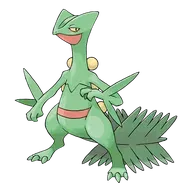 Sceptile Grass | C | |
Available Moves Moves
Damage vs Larvitar View Sceptile builds →Leaf Storm 4x424-499%KO Leaf Blade 4x249-293%KO Energy Ball 4x294-346%KO Brick Break 2x69-82% | ||
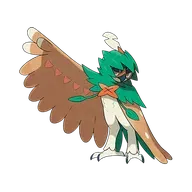 Decidueye GrassGhost | C | |
Obtain MethodEvolve Rowlet (Route 1 Gift) Available Moves Moves
Damage vs Larvitar View Decidueye builds →Leaf Storm 4x408-480%KO Leaf Blade 4x298-350%KO Energy Ball 4x281-331%KO Steel Wing 2x77-91% | ||
 Leafeon Grass | C | |
Obtain MethodEvolve Eevee (Paniola Ranch Gift) Available Moves Moves
Damage vs Larvitar View Leafeon builds →Leaf Blade 4x306-360%KO Energy Ball 4x191-226%KO Giga Drain 4x158-187%KO Magical Leaf 4x130-154%KO | ||
 Poliwrath WaterFighting | C | |
Obtain MethodEvolve Poliwag (Brooklet Hill Surfing) Available Moves Moves
Damage vs Larvitar View Poliwrath builds →Dynamic Punch 2x150-178%KO Submission 2x120-142%KO Brick Break 2x114-134%KO Bubble Beam 4x154-182%KO | ||
In Ultra Sun & Ultra Moon, Excadrill can KO Larvitar with Earthquake (242-285%). Tentacruel threatens a KO with Scald (207-244%). Amoonguss's Giga Drain also KOs at 205-241%.
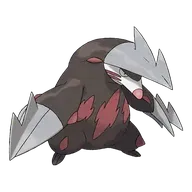 Excadrill GroundSteel | A | |
Recommended Build AbilityMold Breaker ItemFocus Sash NatureJolly Moves
Damage vs Larvitar View Excadrill builds →Earthquake 2x242-285%KO Rapid Spin20-24% | ||
 Tentacruel WaterPoison | B | |
Recommended Build AbilityClearbody ItemBlack Sludge NatureTimid Moves
Damage vs Larvitar View Tentacruel builds →Scald 4x207-244%KO Rapid Spin9-10% Sludge Bomb15-17% | ||
 Amoonguss GrassPoison | B | |
Recommended Build AbilityRegenerator ItemBlack Sludge NatureSassy Moves
Damage vs Larvitar View Amoonguss builds →Giga Drain 4x205-241%KO | ||
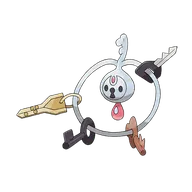 Klefki SteelFairy | B | |
Recommended Build AbilityPrankster ItemLeftovers NatureBold Moves View Klefki builds →
| ||
 Hawlucha Fighting | B | |
Recommended Build AbilityUnburden ItemElectricseed NatureAdamant Moves
Damage vs Larvitar View Hawlucha builds →Acrobatics28-33% High Jump Kick 2x266-312%KO | ||
Ultra Sun & Ultra Moon Evolution
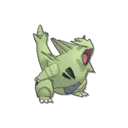
Larvitar is the start of a three-stage chain. It evolves into Pupitar first, then eventually reaches Tyranitar. For breeding, takes forever to hatch with plenty of partners via one egg group. Evolving adds up to 300 stat points total. View every chain in the Evolution Chart.
How to Evolve


Breeding
Breed Larvitar with 79 breeding partners from the Monster egg group. Pass egg moves like Ancient Power, Assurance, Curse and 9 more to offspring.

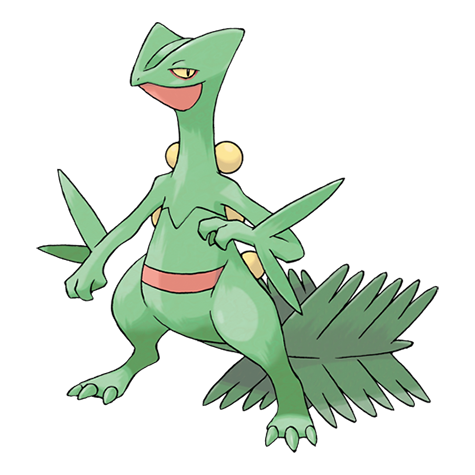
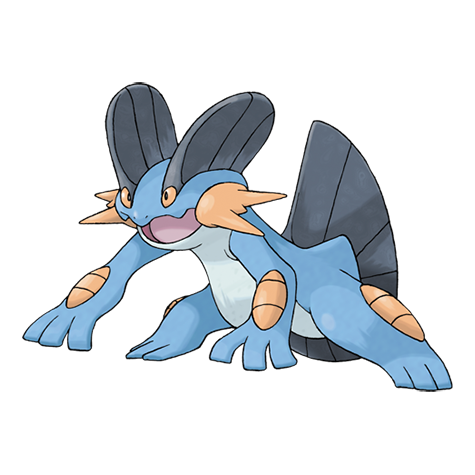

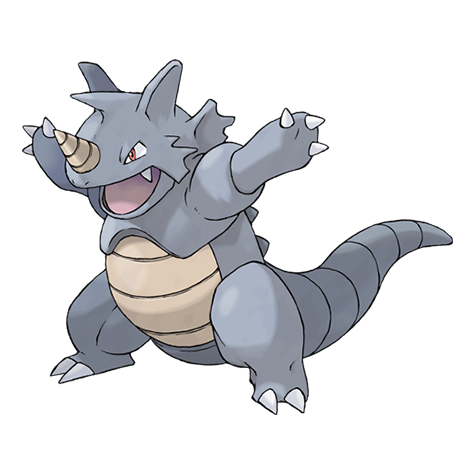

Ultra Sun & Ultra Moon Larvitar Best Moveset
Best Build
No build content available for this Pokemon in Gen 7.
Try selecting a different game/generation filter, or check back later.
Moves
Breeding's the move. Ancient Power and Assurance give Larvitar options it can't learn any other way, and Dark and Normal coverage and more already covers a decent range on top of Earthquake and Stone Edge. The egg moves push it further.
Level-Up Moves
TM Moves
Egg Moves
Tutor Moves
Transfer Moves
Ultra Sun & Ultra Moon Larvitar Locations
A few locations for Larvitar with moderate rates across mid-game routes. The sort toggle below swaps between best odds and earliest access, so you can approach it based on where you are in the game.
Best Locations to Catch Larvitar in Ultra Sun & Ultra Moon
Larvitar Guide
Larvitar evolves into Pupitar at level 30. Takes some grinding. Plan your team around the mid-game wait.
In Ultra Sun & Ultra Moon, Larvitar does the job early-game if you need a Rock/Ground type on your team. Evolve it into Pupitar before the later gyms and it holds up fine through the story.
Larvitar is catchable in Ultra Sun & Ultra Moon. Check the Locations section above for specific routes, encounter rates, and methods. It also appears in 17 other games across the series.
Game Availability
Larvitar first appeared in Gold & Silver and has been available in 18 games across 9 generations. Obtainable through catching or hatching as a base form in most titles where it appears.
Click a game to view version-specific details
- Gen 1Y
 Yellow
 - Gen 1RB

 Red & Blue
 - Gen 2GSDebut

 Gold & Silver
 - Gen 2C
 Crystal
 - Gen 3RS
 Ruby & Sapphire
 - Gen 3FRLG

 FireRed & LeafGreen
 - Gen 3E
 Emerald
 - Gen 4Pt
 Platinum
 - Gen 4HGSS

 HeartGold & SoulSilver
 - Gen 4DP
 Diamond & Pearl
 - Gen 5BW

 Black & White
 - Gen 5B2W2

 Black 2 & White 2
 - Gen 6XY

 X & Y
X & Y - Gen 6ORAS

 Omega Ruby & Alpha Sapphire
 - Gen 7USUM

 Ultra Sun & Ultra Moon
 - Gen 7SM

 Sun & Moon
 - Gen 7LGPE

 Let's Go Pikachu & Eevee
 - Gen 8SwSh

 Sword & Shield
 - Gen 8PLA
 Legends: Arceus
 - Gen 8BDSP
 Brilliant Diamond & Shining Pearl
 - Gen 9SV

 Scarlet & Violet
 - Gen 9LZA
 Legends: Z-A
 - Gen 10WW
 Winds & Waves