
Stats & Training
Larvitar's stats barely vary. None sit in respectable range with no real gaps. It's a blank slate for EV investment. Worth 1 Attack EV, slow 1.25M XP grind to max.
A LARVITAR is born deep under the ground. It must eat its way through the soil above and reach the surface for it to see its parents’ faces.
Larvitar Weakness
Type-wise, Larvitar takes extra damage from Water, Grass, Ice, Fighting, Ground, and Steel. Watch out for Water and Grass attacks, those deal 4x damage. Electric moves do nothing thanks to a full immunity. It resists 5 types, giving it decent defensive coverage.
| Damage | Types |
|---|---|
| 4x (Critical) | Water, Grass |
| 2x (Weak) | Ice, Fighting, Ground, Steel |
| 0.5x (Resist) | Normal, Fire, Flying, Rock |
| 0.25x (Resist) | Poison |
| 0x (Immune) | Electric |
- Dark and Steel types added — Fairy does not exist yet
- Moves are Physical or Special based on type, not per move
In Emerald, Forretress can KO Larvitar with Earthquake (95-112%). Heracross threatens a KO with Megahorn (137-162%). Gyarados's Earthquake also KOs at 168-198%.
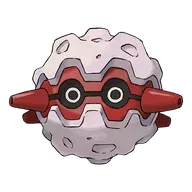 Forretress BugSteel | B | |
Recommended Build AbilitySturdy ItemLeftovers NatureCareful Moves
Damage vs Larvitar View Forretress builds →Rapid Spin12-14% Explosion59-69% Earthquake 2x95-112%KO | ||
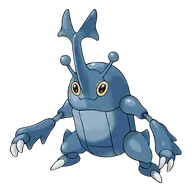 Heracross BugFighting | B | |
Recommended Build AbilitySwarm ItemSalacberry NatureJolly Moves
Damage vs Larvitar View Heracross builds →Megahorn137-162%KO Rock Slide29-34% | ||
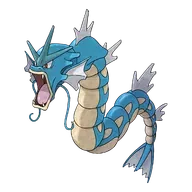 Gyarados Water | B | |
Recommended Build AbilityIntimidate ItemLeftovers NatureAdamant Moves
Damage vs Larvitar View Gyarados builds →Earthquake 2x168-198%KO | ||
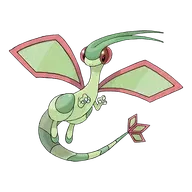 Flygon GroundDragon | B | |
Recommended Build AbilityLevitate ItemLeftovers NatureImpish Moves
Damage vs Larvitar View Flygon builds →Earthquake 2x155-183%KO Rock Slide20-23% | ||
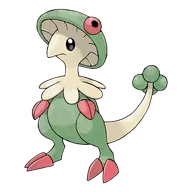 Breloom GrassFighting | B | |
Recommended Build AbilityEffect Spore ItemLeftovers NatureJolly Moves
Damage vs Larvitar View Breloom builds →Mach Punch 2x95-112%KO | ||
Emerald Evolution
Larvitar is the start of a three-stage chain. It evolves into Pupitar first, then eventually reaches Tyranitar. For breeding, takes forever to hatch with a decent partner pool via one egg group. Evolving adds up to 300 stat points total. View every chain in the Evolution Chart.
How to Evolve


Breeding
Breed Larvitar with 49 breeding partners from the Monster egg group. Pass egg moves like Ancient Power, Curse, Dragon Dance and 4 more to offspring.


Emerald Larvitar Best Moveset
Best Build
No build content available for this Pokemon in Gen 3.
Try selecting a different game/generation filter, or check back later.
Moves
Breeding's the move. Ancient Power and Curse give Larvitar options it can't learn any other way, and Dark and Normal coverage and more already covers a decent range on top of Earthquake and Dig. The egg moves push it further.
Level-Up Moves
TM Moves
Egg Moves
Tutor Moves
How to Get Larvitar in Emerald
Larvitar can't be caught in Emerald. Bring it over from Gold, Crystal, or Scarlet instead. The encounter info below covers the source games.
Larvitar Guide
Larvitar evolves into Pupitar at level 30. Takes some grinding. Plan your team around the mid-game wait.
In Emerald, Larvitar does the job early-game if you need a Rock/Ground type on your team. Evolve it into Pupitar before the later gyms and it holds up fine through the story.
Larvitar is catchable in Emerald. Check the Locations section above for specific routes, encounter rates, and methods. It also appears in 17 other games across the series.
Game Availability
Larvitar first appeared in Gold & Silver and has been available in 18 games across 9 generations. Obtainable through catching or hatching as a base form in most titles where it appears.
Click a game to view version-specific details
- Gen 1Y
 Yellow
 - Gen 1RB
 Red & Blue
 - Gen 2GSDebut
 Gold & Silver
 - Gen 2C
 Crystal
 - Gen 3RS
 Ruby & Sapphire
 - Gen 3FRLG
 FireRed & LeafGreen
 - Gen 3E
 Emerald
 - Gen 4Pt
 Platinum
 - Gen 4HGSS
 HeartGold & SoulSilver
 - Gen 4DP
 Diamond & Pearl
 - Gen 5BW
 Black & White
 - Gen 5B2W2
 Black 2 & White 2
 - Gen 6XY
 X & Y
X & Y - Gen 6ORAS
 Omega Ruby & Alpha Sapphire
 - Gen 7USUM
 Ultra Sun & Ultra Moon
 - Gen 7SM
 Sun & Moon
 - Gen 7LGPE
 Let's Go Pikachu & Eevee
 - Gen 8SwSh
 Sword & Shield
 - Gen 8PLA
 Legends: Arceus
 - Gen 8BDSP
 Brilliant Diamond & Shining Pearl
 - Gen 9SV
 Scarlet & Violet
 - Gen 9LZA
 Legends: Z-A
 - Gen 10WW
 Winds & Waves